
The Tankard A Wounded SEAL Refuses To Rush
“The first time I finished a tankard, my hands felt like they had a job again”
Why a 54-year-old former Navy SEAL is selling his last hand-cast anchor tankards at a special price, before the nerve damage in his hand takes that job away for good.
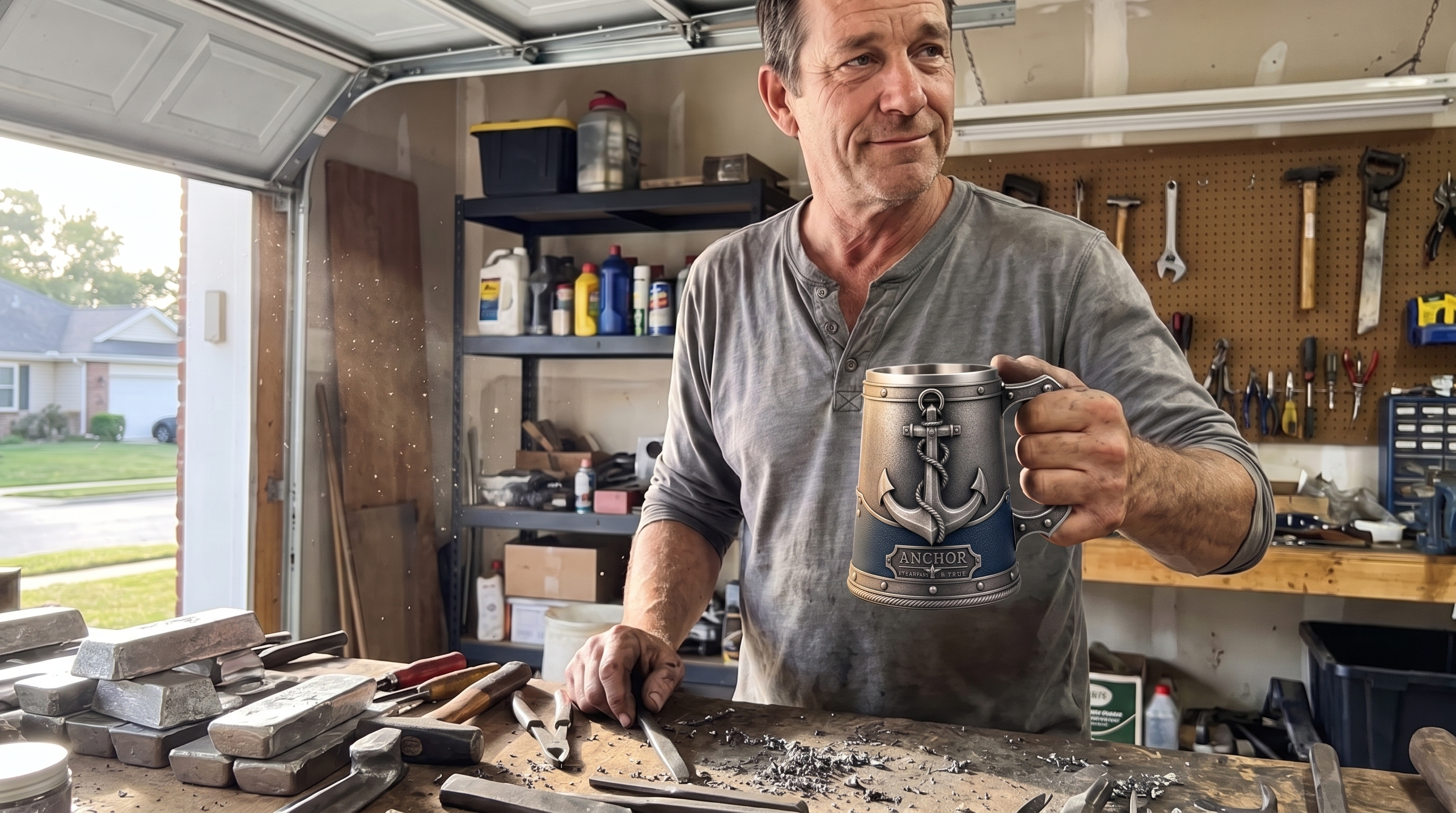
Jack Kowalski, 54, in the garage workshop behind his house in Norfolk, Virginia. The last batch of anchor tankards he will ever cast is curing on the bench behind him.
In Jack Kowalski’s garage in Norfolk, Virginia, there is a cardboard box marked SCRAP in black marker. Fourteen tankards are in it right now. Cracked resin. A crooked anchor. Rope-wrap wound half a turn too loose on the handle. Jack does not ship a piece with a flaw in it, even a flaw only he would ever notice — even on a morning when his right hand will barely close around the mug at all.
That hand is the reason there are only so many mornings left to make more.
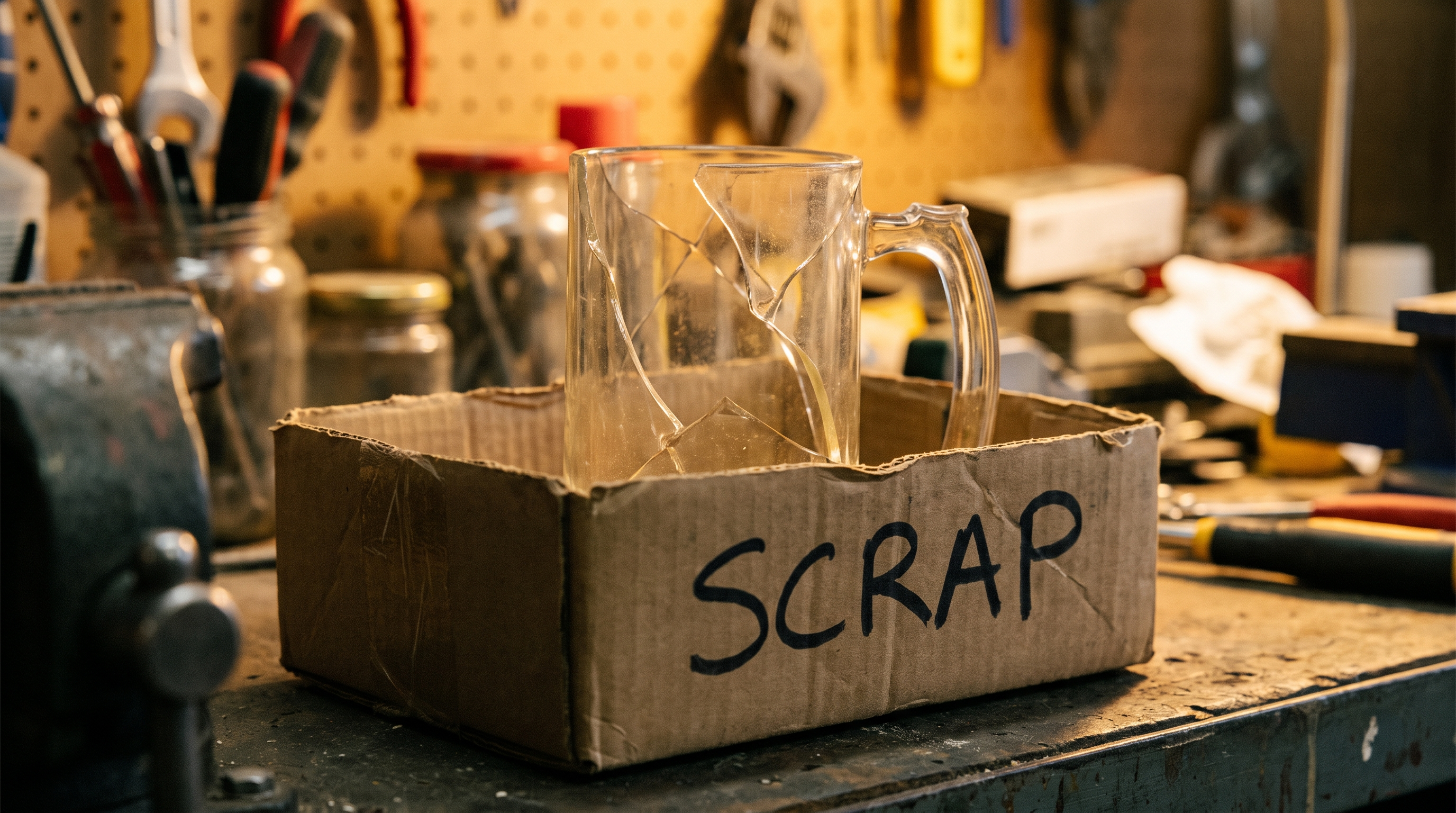
The scrap box. Jack keeps every rejected piece for a week before he throws it out — a habit from an old platoon sergeant who taught him to never lose track of what didn’t work.
Fourteen years ago, none of this existed. Jack Kowalski was six months out of the Navy, twenty years a SEAL, and trying to figure out what a Tuesday was supposed to feel like without a mission attached to it. He had come home from his last deployment with a wrecked right hand and a body that no longer did what it used to. What he did not have was a workshop, a mold, or any plan to build one.
Why Most “Support The Troops” Merchandise Would Embarrass The Troops It Claims To Honor
Search “Navy mug” on any major marketplace and the same tankard appears under a dozen different seller names. Thin injection-molded plastic, sometimes chromed to look like pewter. A flat printed decal of an anchor, laid on top rather than built into the piece. A heat-transfer “Support Our Troops” slogan that starts cracking after two runs through a dishwasher. Made in bulk, on a line, by a factory that has never changed the mold in a decade because nobody who buys one ever complains — they just quietly stop using it.
None of it is built to be handled. None of it is built to last. And for a product that exists specifically to honor a term of service, that is the part that stings.
- A flat sticker or heat-transfer decal standing in for real sculpted detail — nothing is raised, nothing is cast.
- Single-wall plastic or thin stamped metal with no inner liner — hot drinks pick up a metallic or plastic taste within weeks.
- A handle sized for a display shelf, not a hand — too small to grip with confidence, especially for anyone missing full strength or dexterity.
- A finish that is sprayed on in one pass, uniform and flat — nothing that looks like it has actually seen twenty years of service.
Jack did not set out to fix any of that. He set out to fix a Tuesday.
The SEAL Who Came Home And Didn’t Know What A Tuesday Was For
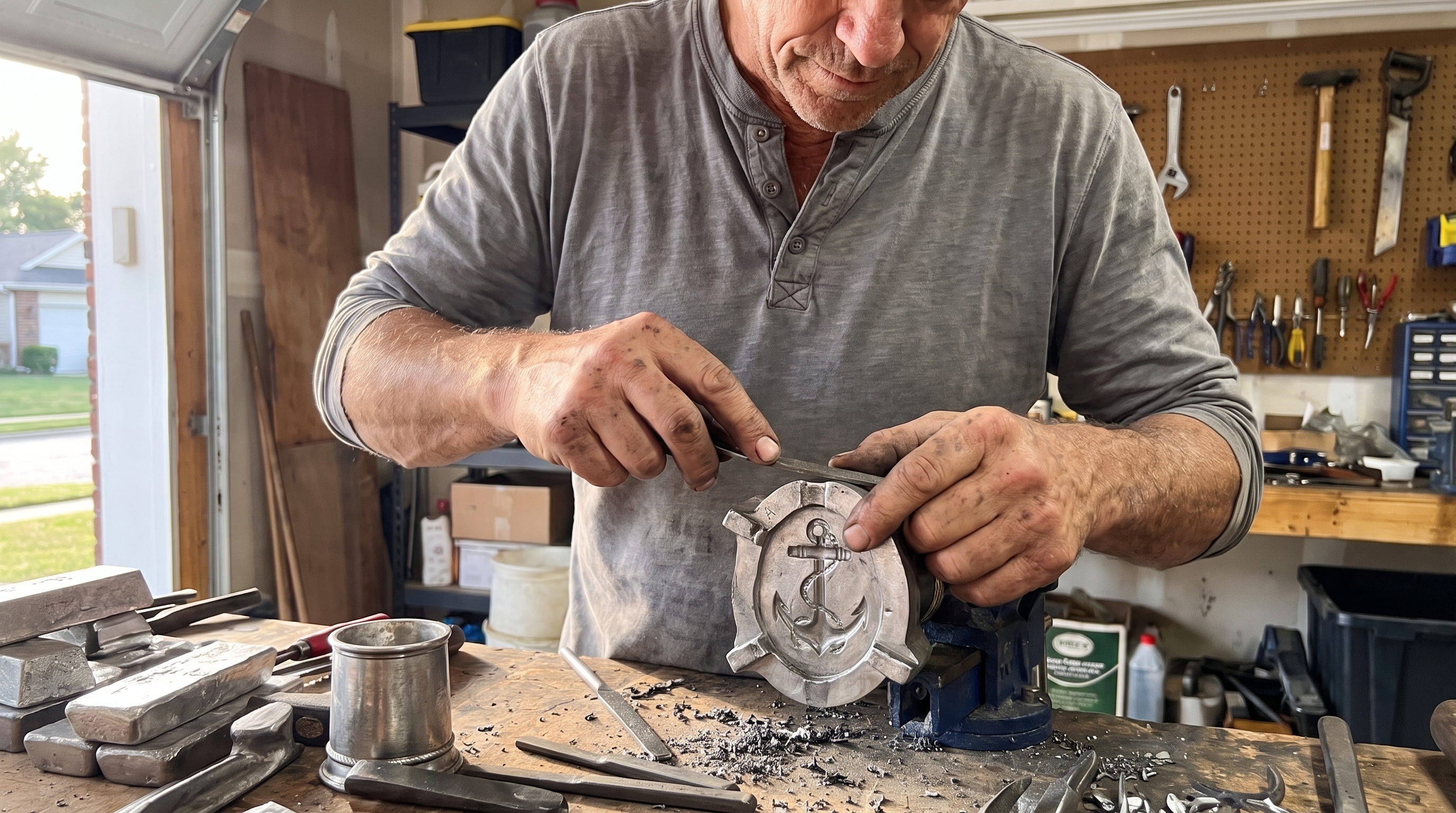
The workbench Jack built himself in the corner of his garage. The anchor mold on the left was the first one he ever pulled a tankard from.
Jack Kowalski did two decades as a Navy SEAL. His last deployment ended when shrapnel from an IED tore into his right hand and wrist, leaving nerve damage that has never fully resolved. He came home to Norfolk with a settlement, a diagnosis, and no idea how to spend a Tuesday that didn’t have a mission attached to it.
“You spend twenty years knowing exactly what today is for,” he says, without looking up from the mold he is prepping. “Then one day there’s no mission, and your hand doesn’t work right, and it’s just… Tuesday.”
A friend from his old platoon was retiring the following spring and needed a gift — something that actually meant something, not another engraved pen set. Jack remembered an anchor mold he’d bought on a whim two years earlier and never touched, still boxed in the garage. He pulled it out, mixed his first batch of casting resin at the kitchen table, and spent three evenings figuring out, by trial and error, how to get a clean pour and a sharp relief.
“The first time I finished a tankard, my hands felt like they had a job again.”
Word moved fast through the veteran community after that. Guys from his old teams wanted one for their own shelf. A few wanted one for a buddy who didn’t make it home. Jack now runs a few small batches a year out of that same garage — each tankard hand-finished by him, alone, before the nerve damage in his hand makes the detail work impossible for the day.
Six Details On Every Tankard That A Factory Line Would Never Bother With
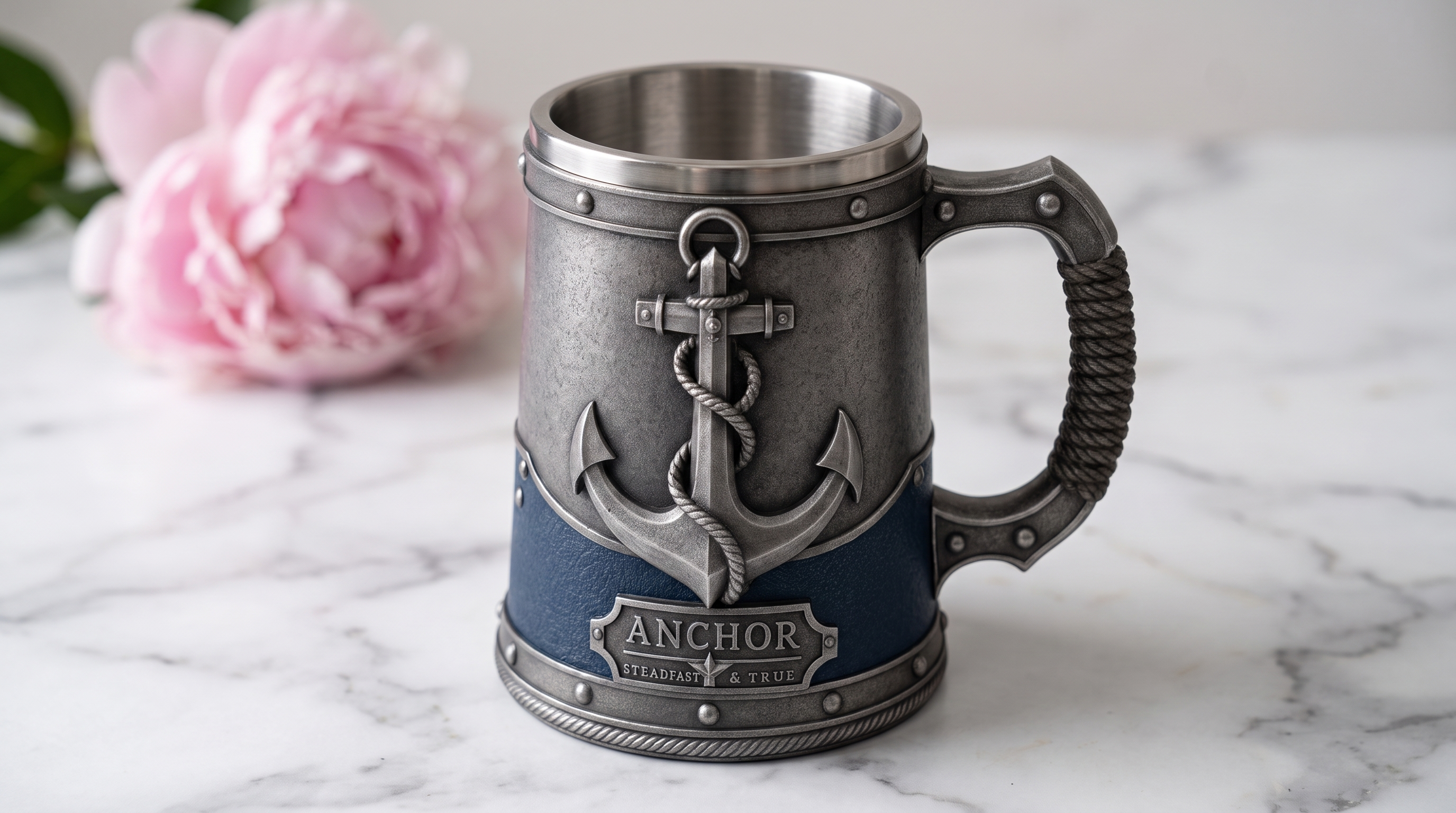
The stainless rim is the tell. Everything below it is hand-cast and hand-finished, one tankard at a time.
Jack walked me through what actually goes into each one. He does not call it a design philosophy. He calls it “doing it right, because I’ve got the time to now.”
A true stainless-steel inner cup is sealed inside the sculpted pewter-tone shell — steel hull, cast deck. It is why a hot drink stays hot and never picks up the metallic or plastic aftertaste that thin single-wall tankards are known for.
The NAVY lettering, the anchor, the ship’s wheel, the rope trim, and the fluted side columns are all cast in raised, sculpted relief — not a flat decal laid on top. Every letter and emblem stands proud off the surface, the way a unit crest would on an actual piece of hardware.
The gunmetal-pewter finish is hand-applied in multiple passes with a brush and a rag, not sprayed on in one uniform coat. That is why no two tankards patina exactly alike — each one looks like it has already seen twenty years of service before it ever leaves the garage.
An oversized, riveted-look handle is wrapped tight in true rope-texture cord, sized for a full hand. No fumbling for a handle built for a display shelf instead of an actual grip.
The stainless-steel rim visible at the mouth of the cup is fully sealed against the outer shell — food-safe, no gap where the pewter-resin body can ever touch what you drink.
Every tankard is weighted and handled so it can be lifted and held steady with one working hand. Jack tests this personally, on his bad mornings, before anything ships. “If I can hold it steady when my hand’s not cooperating, anybody can.”
The Retirement Gift That Turned Into A Waiting List
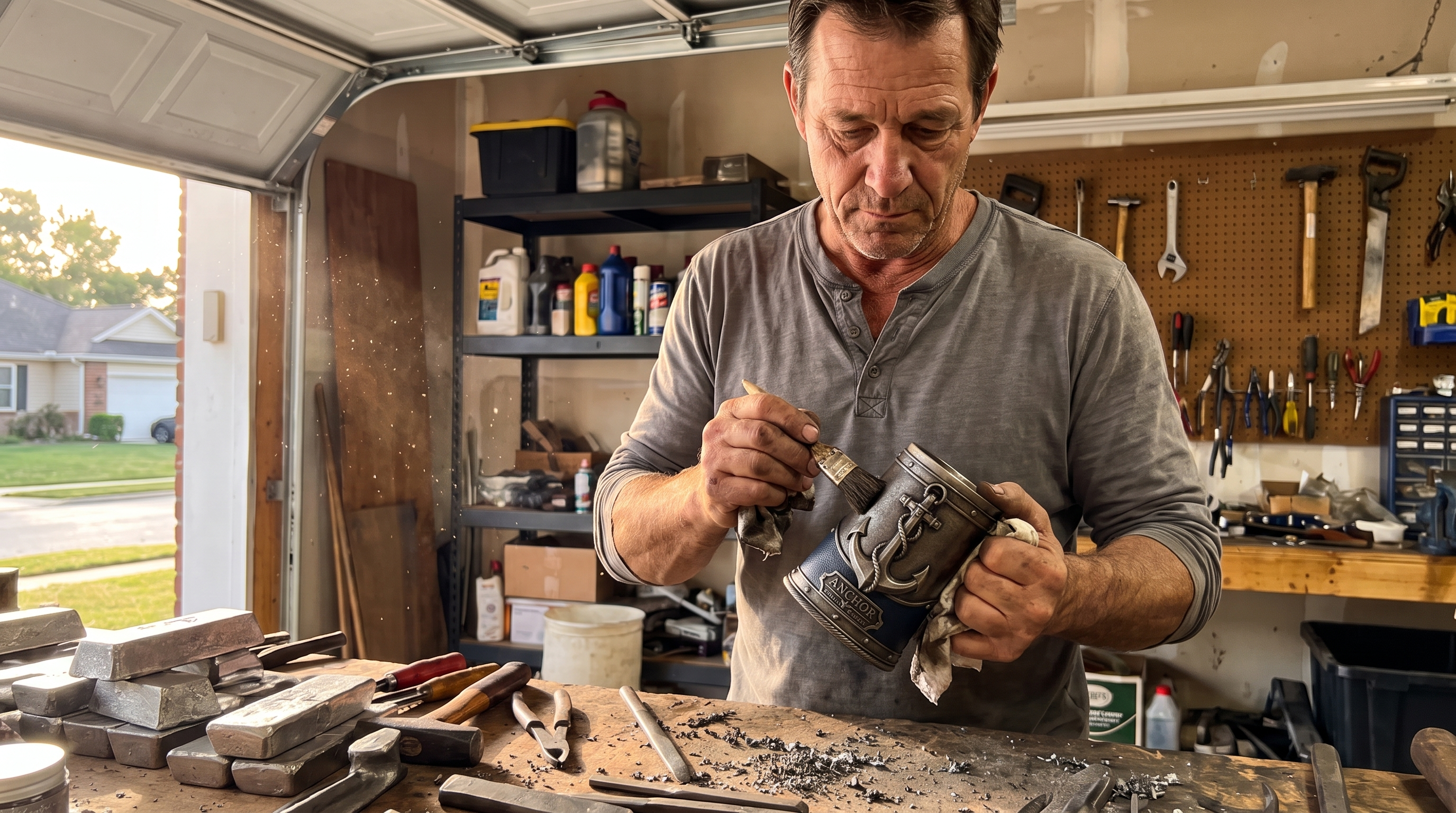
The patina pass is the step Jack refuses to hand off to anyone else — on a good morning, or a bad one.
That first tankard shipped to his old platoon-mate two states away. A photo came back within the week: the tankard on a shelf next to a folded flag and a challenge coin. Jack says that photo is still taped inside his garage door.
After that, the requests came from people he’d never met — guys who’d heard about it through a unit reunion, a VFW hall, a Facebook group for retired SEALs and their families. Some wanted one for themselves. More than one wanted one for a buddy who didn’t come home, to sit on a shelf where the family could see it.
Jack has never advertised any of it. He has never needed to.
Why There Will Not Be Another Batch After This One
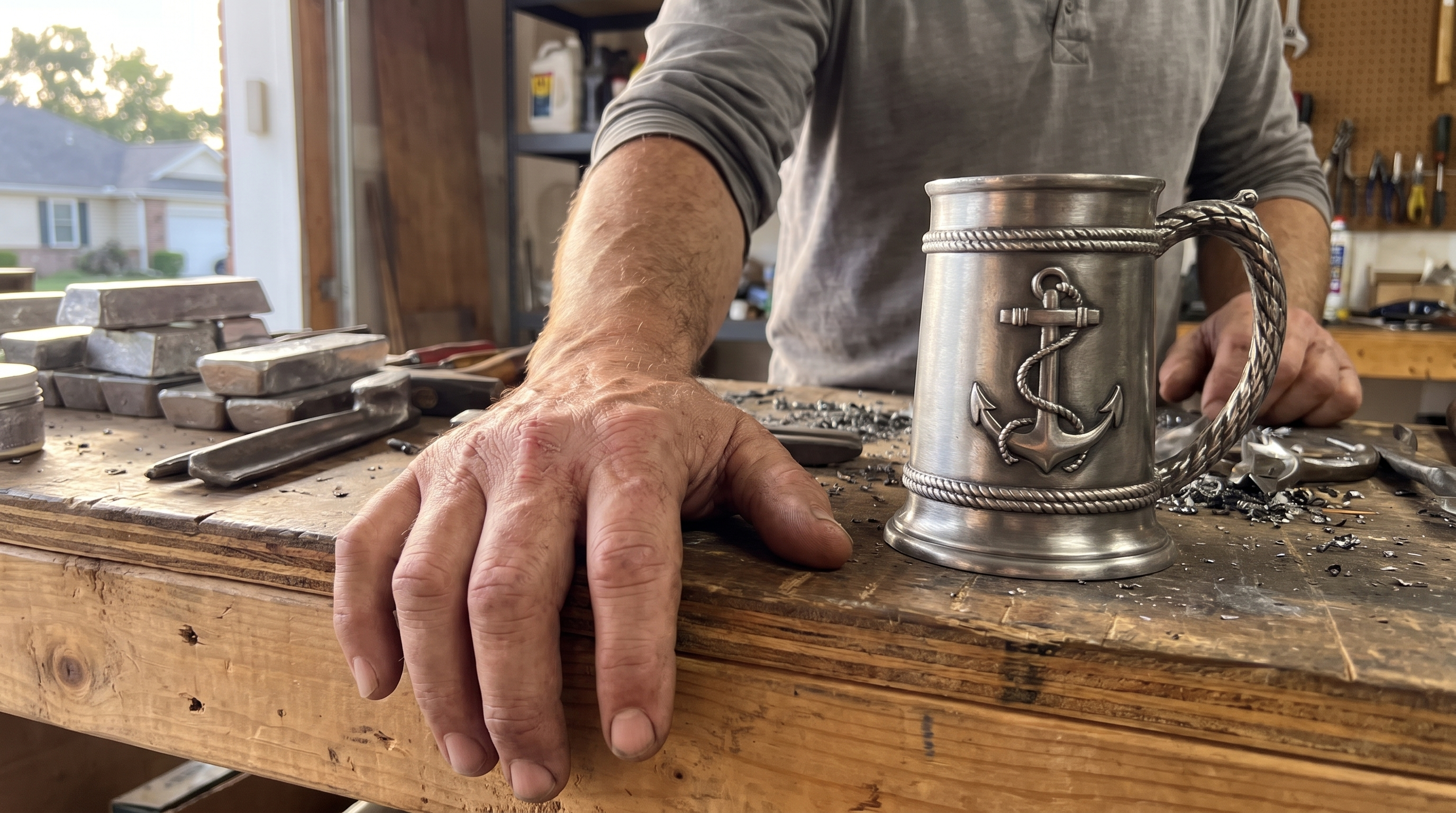
The hand that does the fine relief-sanding and hand-patina work on every tankard — the same one the shrapnel found.
Jack can still cast. He can still mix the resin, still prep the mold, still handle the rough sanding on a decent day. What he cannot always do is the fine relief work — the detail sanding around the lettering, the patina passes that take a steady hand and hold it steady for an hour at a stretch.
The shrapnel that tore into his hand and wrist during his last deployment left permanent nerve damage. His VA doctor has told him plainly that it is degenerative, not something that improves with time. Cold mornings make it worse. Long sessions make it worse. On a bad day, the tremor sets in after twenty minutes and that is the day’s work, finished, whether the batch is or not.
“I know exactly how many good hours I’ve got most mornings. I’m not going to ship something I rushed through on a bad-hand day just to hit a number.”
That is why he caps every batch small on purpose, and why this is the last one. There is no apprentice in the garage, no plan to hire it out to someone else’s hands. What is on the shelf right now is what is left: 83 finished tankards, plus what is still curing on the bench. When those ship, the garage closes for good.
Why He Won’t Charge What These Actually Cost Him To Make
By any honest accounting of the hours involved — casting, patina, relief-sanding, the rope-wrap handle assembled by hand — a tankard like this from a boutique metal shop would run well past what Jack charges for his. He has had that conversation more than once, including with his own accountant. He has turned it down every time.
“I’m not trying to make a living off this. I want these on a real shelf, in a real house — not sitting in a box because somebody thought it might be worth more later.”
What matters to him is where they land: a garage, a den, a VFW hall, a shelf next to a folded flag. Not a display case. Not a reseller’s inventory. He keeps the price low on purpose, on the last batch he will ever make, because the point was never the money. It was always the mission.
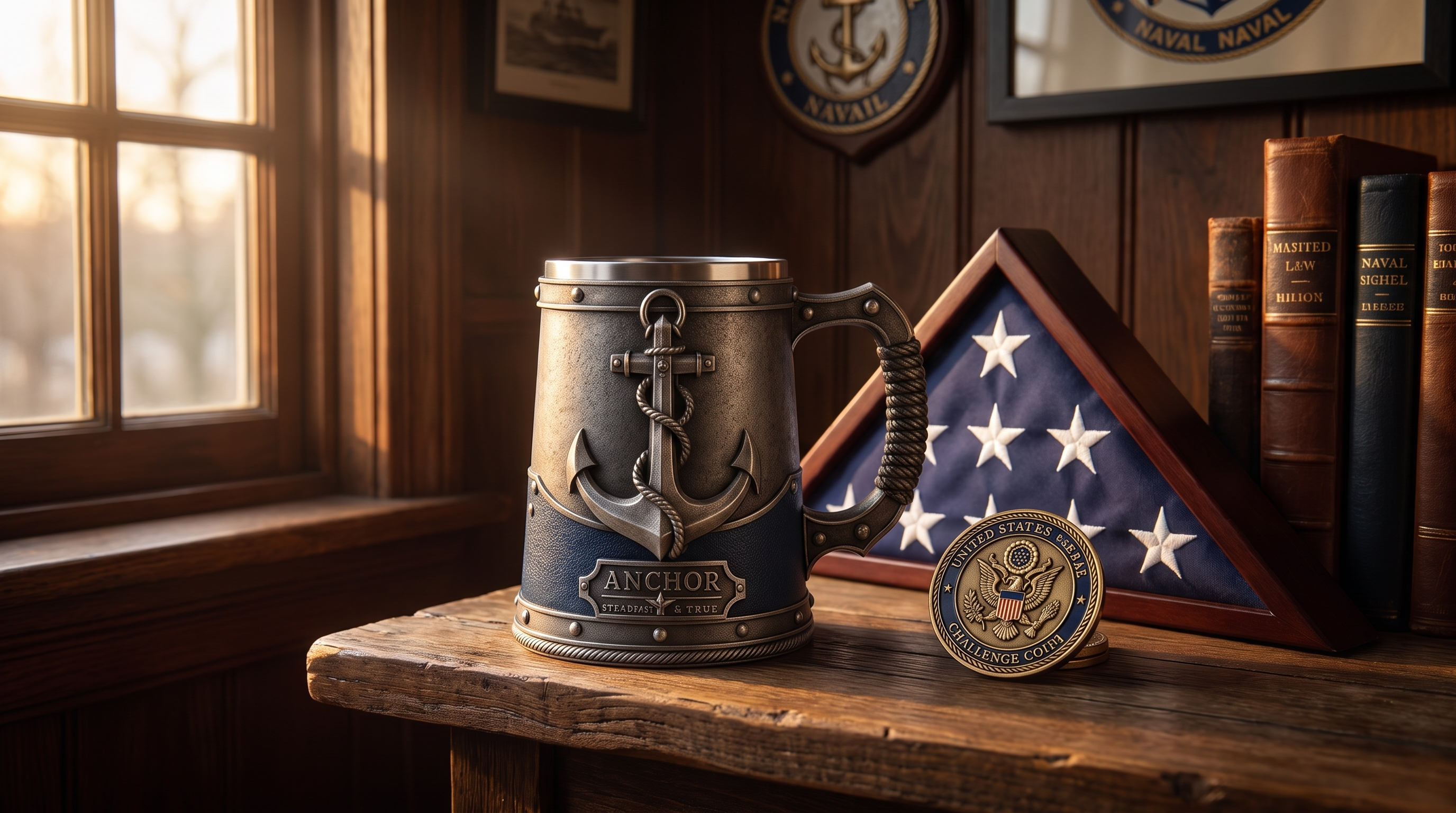
Where Jack wants these to end up. Not a display case — a shelf that gets used.
What Veterans And Their Families Are Saying
“Bought this for my dad’s retirement after 22 years in the Navy. The weight of it surprised me — this isn’t some hollow gift-shop mug. He keeps it on his desk, not in a cabinet. That’s how you know it landed right.”
“I ordered one in memory of my brother. Knowing it was cast by a wounded vet, by hand, in his own garage — that mattered to me more than I expected it to. It sits next to his photo now.”
“The handle is what got me. I’ve got arthritis in both hands and most mugs like this are too small to grip properly. This one I can actually pick up and hold without thinking about it.”
What People Ask Before They Order
More From Verified Buyers
“I’ve bought a lot of ‘military-themed’ drinkware over the years and thrown out almost all of it. This is the first one that actually feels like it was made by someone who served, not licensed by someone who wanted to sell to people who did.”
“Gave this to my husband for our anniversary — twenty years in, most of them Navy. He read the card about Jack’s hand before he even looked at the tankard closely. Both of us got a little choked up.”
“The patina is what sold me in person — no two are alike, and you can tell it was worked by hand and not sprayed in a factory. Ordered a second one for my son-in-law the day mine arrived.”